
Top 12 Shark Diving Locations in the World
The world's top shark diving locations include the Bahamas, California, the Galapagos, Egypt, Fiji, Florida, Indonesia, and the Maldives. From hammerheads and tiger sharks to leopard and bull sharks, these destinations offer unique encounters with different shark species. Options range from shallow snorkeling to liveaboard trips in strong open-ocean currents.
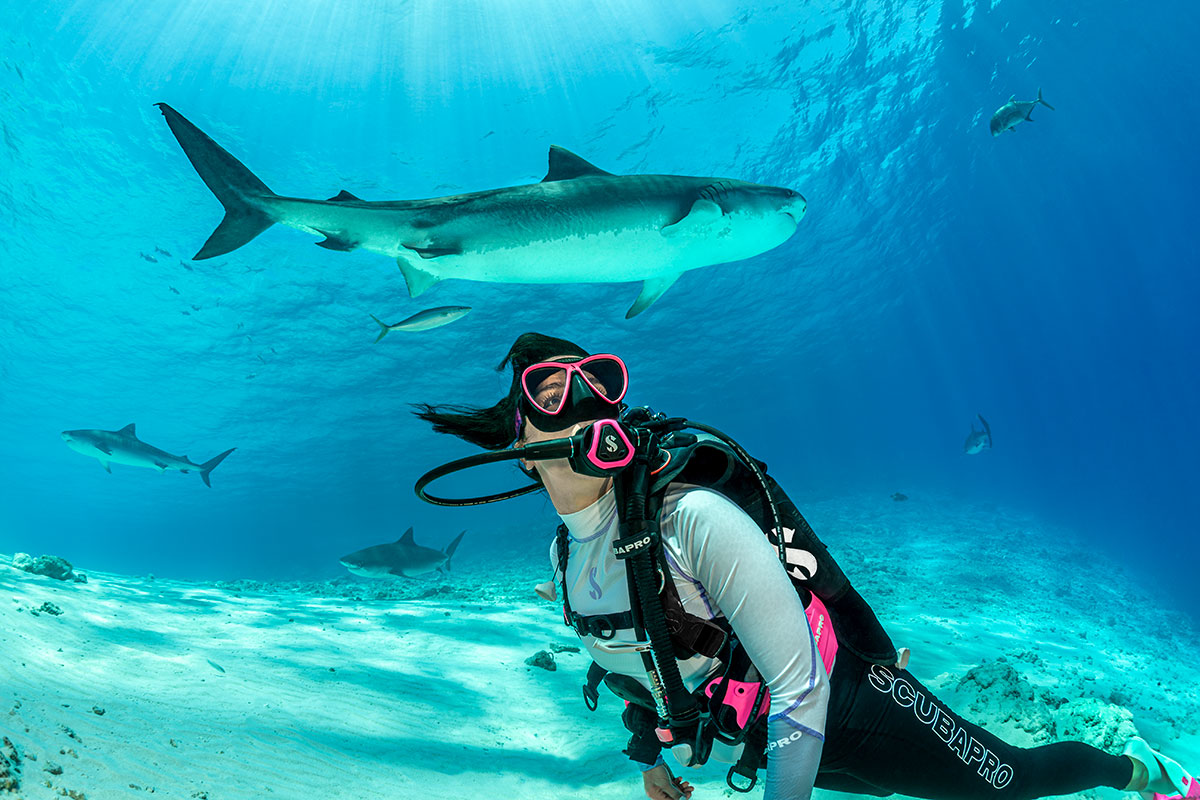
There's nothing quite like the feeling of scuba diving among sharks, whether that's observing a hammerhead feeding session in Bimini, swimming alongside reef sharks, or marveling at great whites from the safety of a cage.
If you're a new diver who just wants to see as many sharks as possible in a single destination or a seasoned diver looking to finally check that last bucket-list species off your list, our guide to the top 12 shark diving locations gives you a great place to start.
Because shark dives can range from shallow snorkels to current-swept liveaboards, planning should include more than a destination shortlist. Packing the right exposure protection, BCD, dive computer, mask, and fins will help ensure your comfort and confidence in the water, especially when the dive plan involves depth, current, or long bottom times.
- Bahamas
- California
- Cocos Island, Galapagos Islands, and Malpelo Island
- Egypt
- Fiji
- Florida
- French Polynesia
- Indonesia
- Maldives
- Philippines
- South Africa
- South Australia
Explore the Top 12 Shark Diving Locations
1. Bahamas
The Bahamas is a shark-lover's paradise, with multiple shark-diving hotspots to choose from depending on what species you want to see, the type of experience you're looking for, and the time of year.
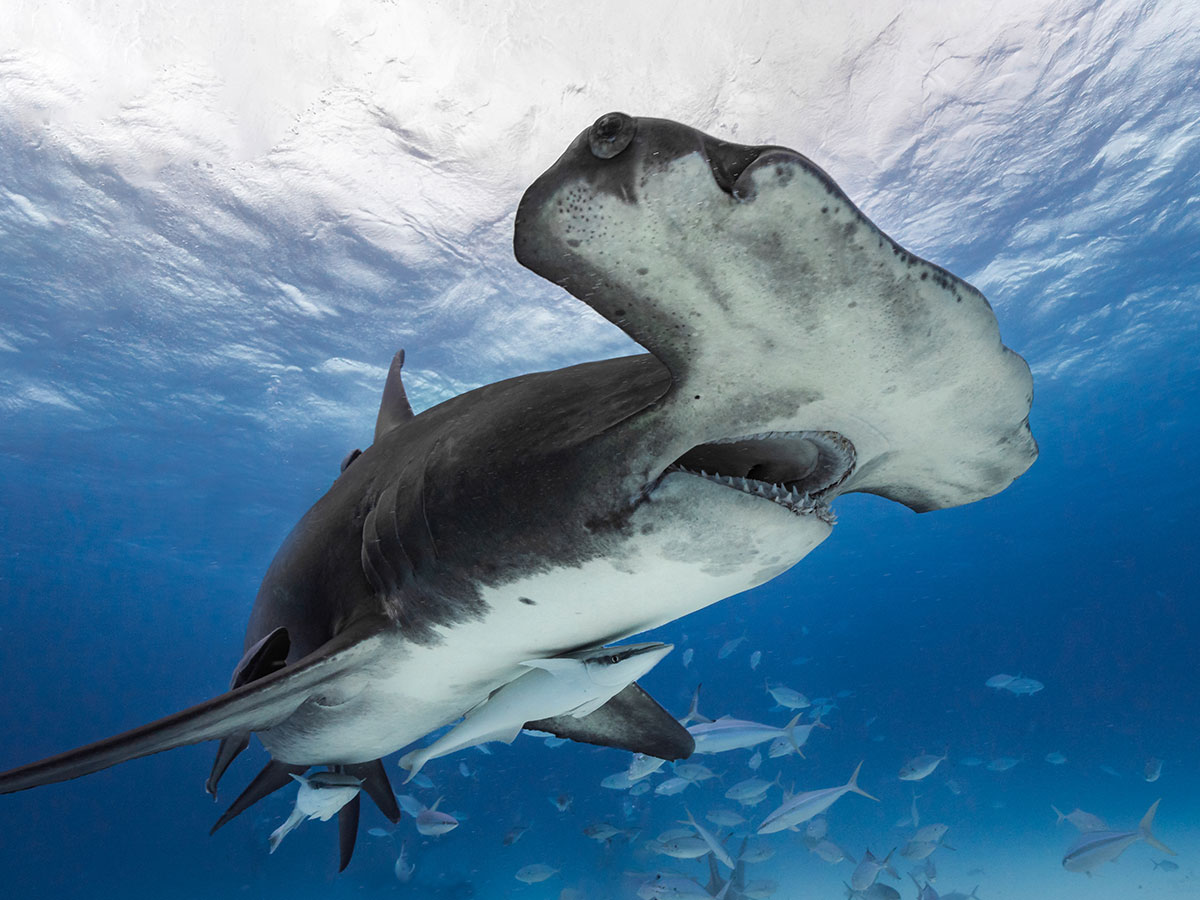
Bimini, just 50 miles (80 kilometers) east of Miami, is the world's best location for up-close encounters with great hammerheads. Despite their fearsome appearance, hammerheads are quite docile, but there's still nothing quite as thrilling as seeing one approach in crystal-clear water just 20 feet (6 meters) below the surface.
Best time to go: November–April
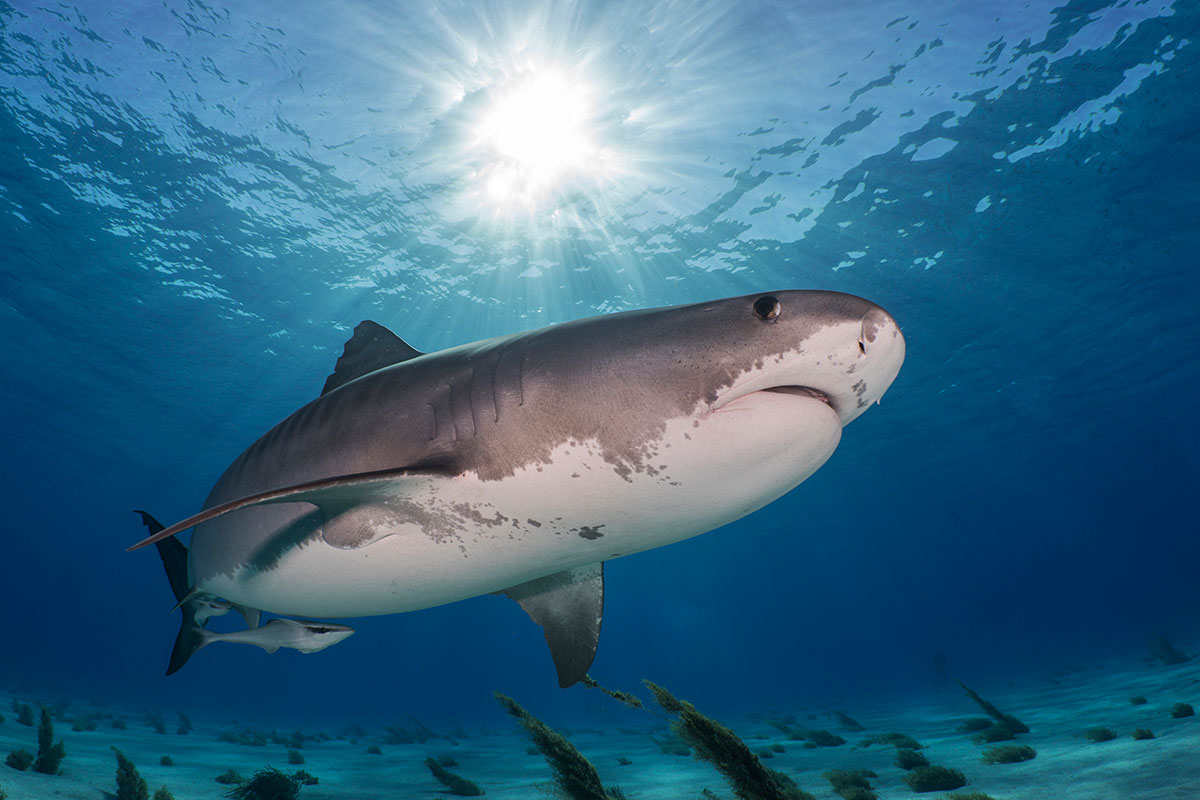
Grand Bahama is home to one of the best-known spots for tiger sharks: the aptly named Tiger Beach. Here you'll find the same cerulean water as Bimini, as well as a similar experience. Once again, divers kneel on the sand while a trained professional feeds the circling tigers, including the iconic Emma, a local legend and frequent visitor. Other potential shark sightings include bull sharks, lemon sharks, reef sharks, and great hammerheads.
Best time to go: Year-round; peak October–January
2. California
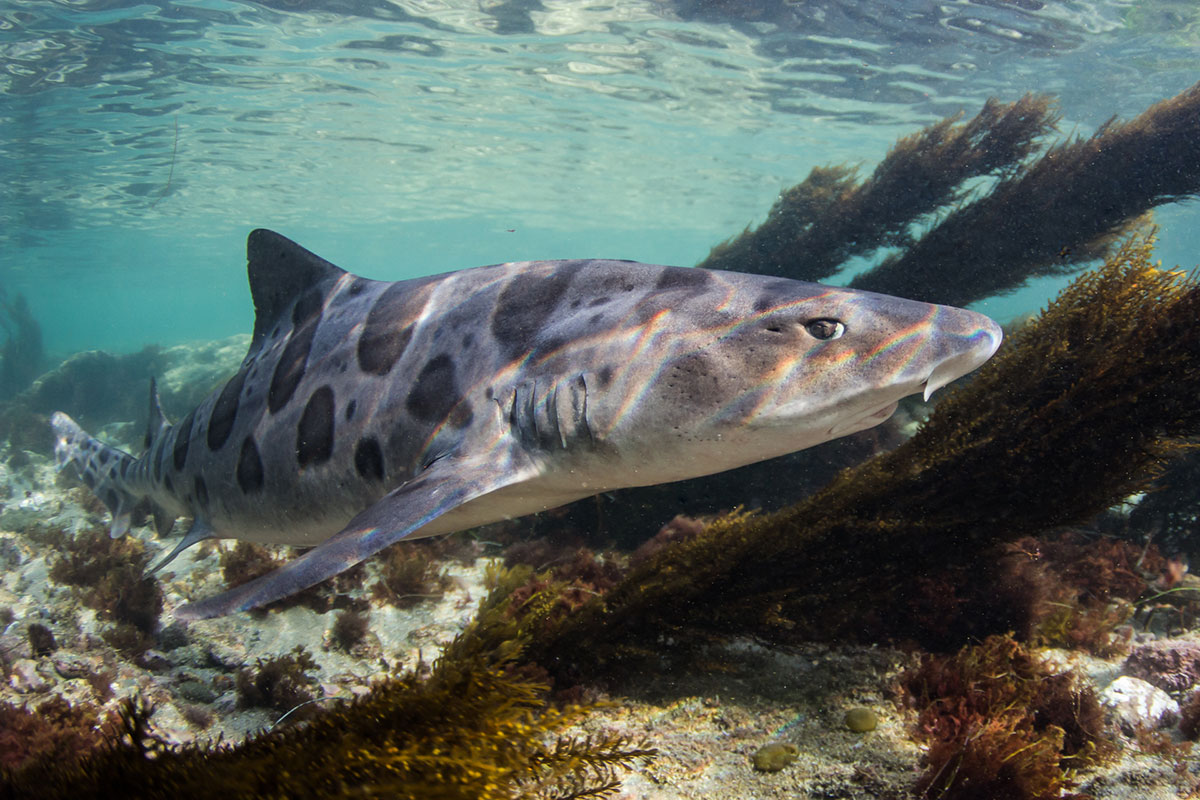
Every summer, hundreds of harmless, distinctively spotted leopard sharks gather in the shallow waters of La Jolla Shores, San Diego, to breed. While it's easy to snorkel with them, you might want to head a bit south to Matlahuayl State Marine Reserve, formerly known as the San Diego La Jolla Underwater Park, where you can spot not only leopard sharks but horn sharks as well.
Best time to go: June–December
3. Cocos Island, Galapagos Islands, and Malpelo Island
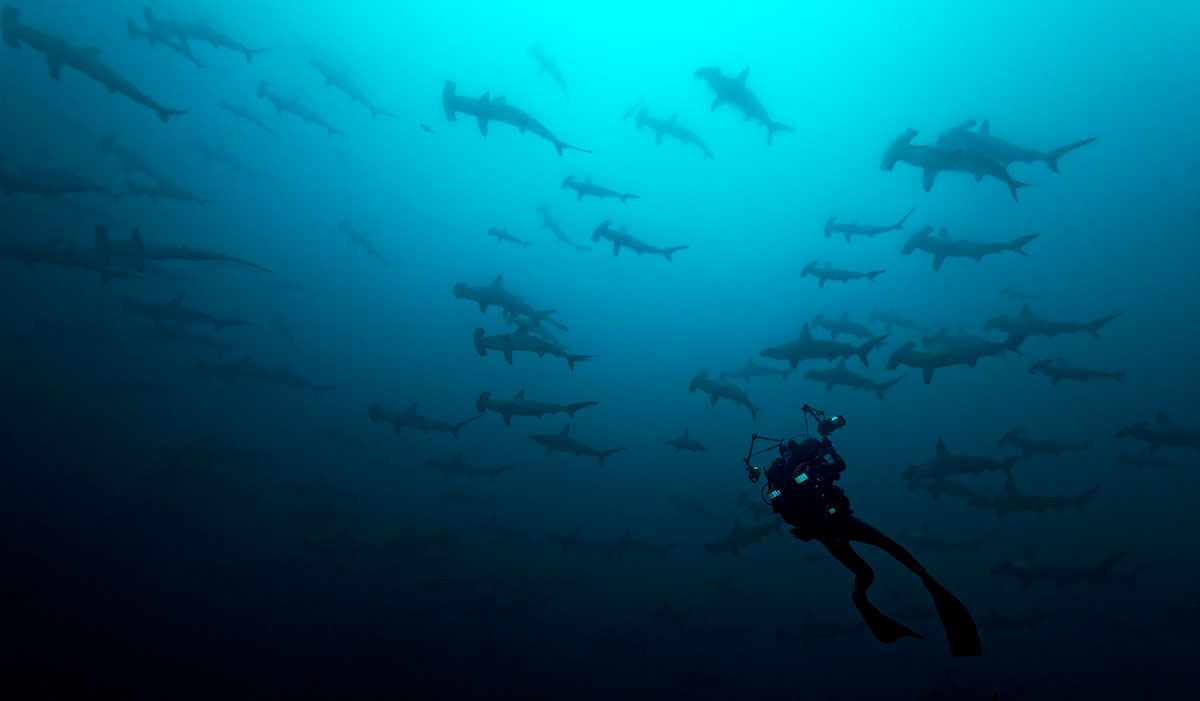
It may seem crazy to combine three of the world's most famous shark-diving destinations into one entry, but hear us out. Cocos, Galapagos, and Malpelo Islands each occupy one vertex of the so-called "hammerhead triangle," a migratory route in the eastern Pacific favored by huge schools of scalloped hammerheads.
Uninhabited Cocos Island, belonging to Costa Rica, lies 36 hours off the coast and is accessible exclusively via liveaboard. Malpelo Island lies roughly 400 miles (645 kilometers) directly east of Cocos, though it's owned by Colombia. Diving here is a bit wilder, with only one dedicated liveaboard.
Finally, the legendary Galapagos Islands, about 600 miles (965 kilometers) off the west coast of Ecuador, offer both day boats and liveaboards that visit iconic sites such as Darwin and Wolf Islands.
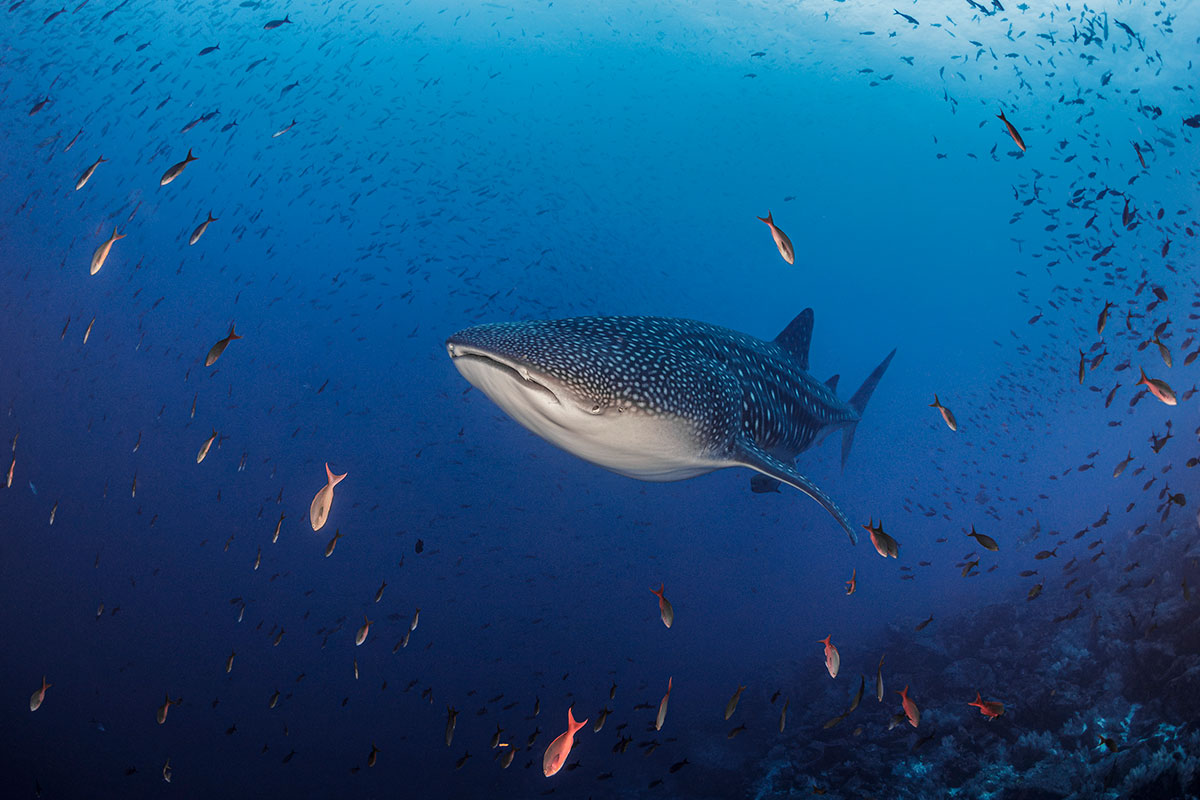
As for the sharks, all three islands feature massive schools of scalloped hammerheads, along with Galapagos sharks, whitetip reef sharks, silkies, tiger sharks, and seasonal whale sharks. The same strong ocean currents that bring nutrients up for the sharks can affect the diving in all three destinations, so make sure you're comfortable with current, surge, and depth before booking a trip to any of the three.
Best time to go: Year-round; June–November for the most sharks
4. Egypt
If you're looking for longimanus, also known as oceanic whitetip sharks, there's one spot that consistently delivers: the Egyptian Red Sea. More specifically, Elphinstone Reef. Accessible either via day boat from Marsa Alam or as part of a liveaboard itinerary, Elphinstone offers an adrenaline-charged experience.
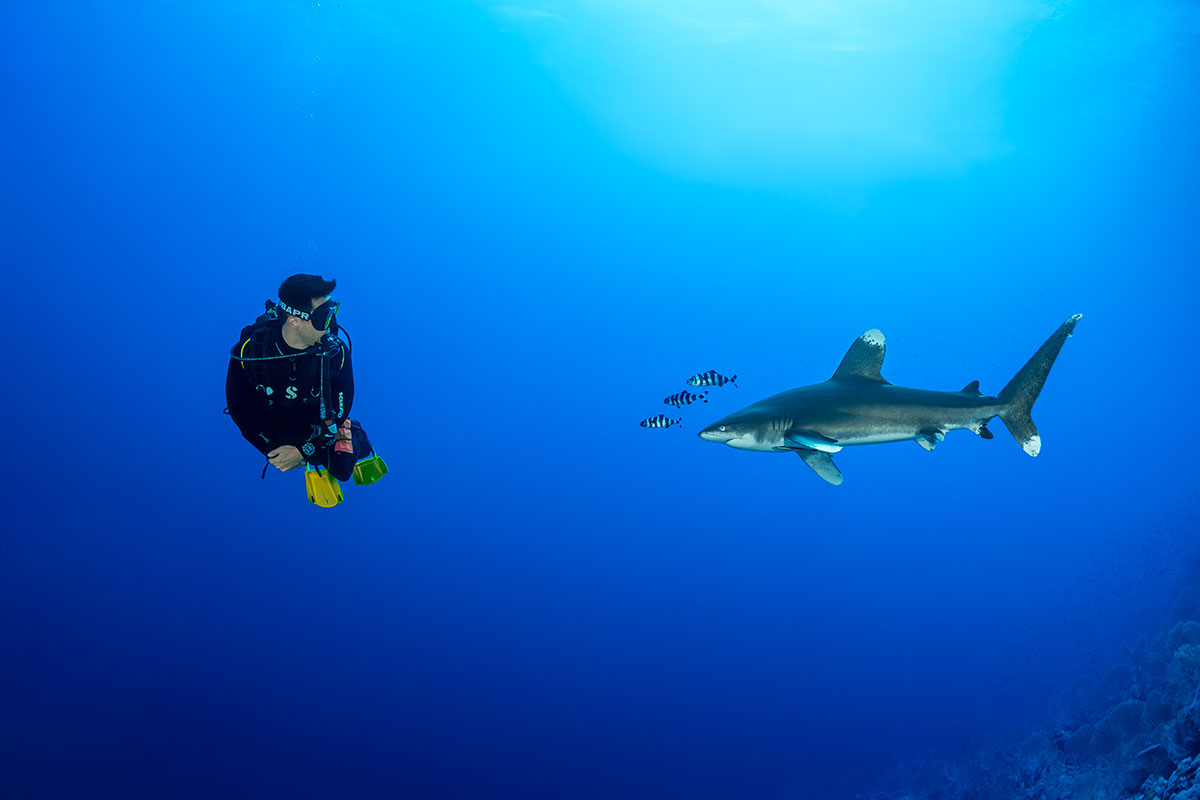
If you're on a liveaboard, you'll be among the first divers in the water each morning. Expect strong currents and frequent encounters with sharks that are accustomed to seeing dozens of divers each day. Listen to the dive briefing and stay close to your dive group, as these curious, confident sharks will come very close to inspect both you and your gear before veering away at the last second.
Best time to go: Year-round; September–December for the most sharks
5. Fiji
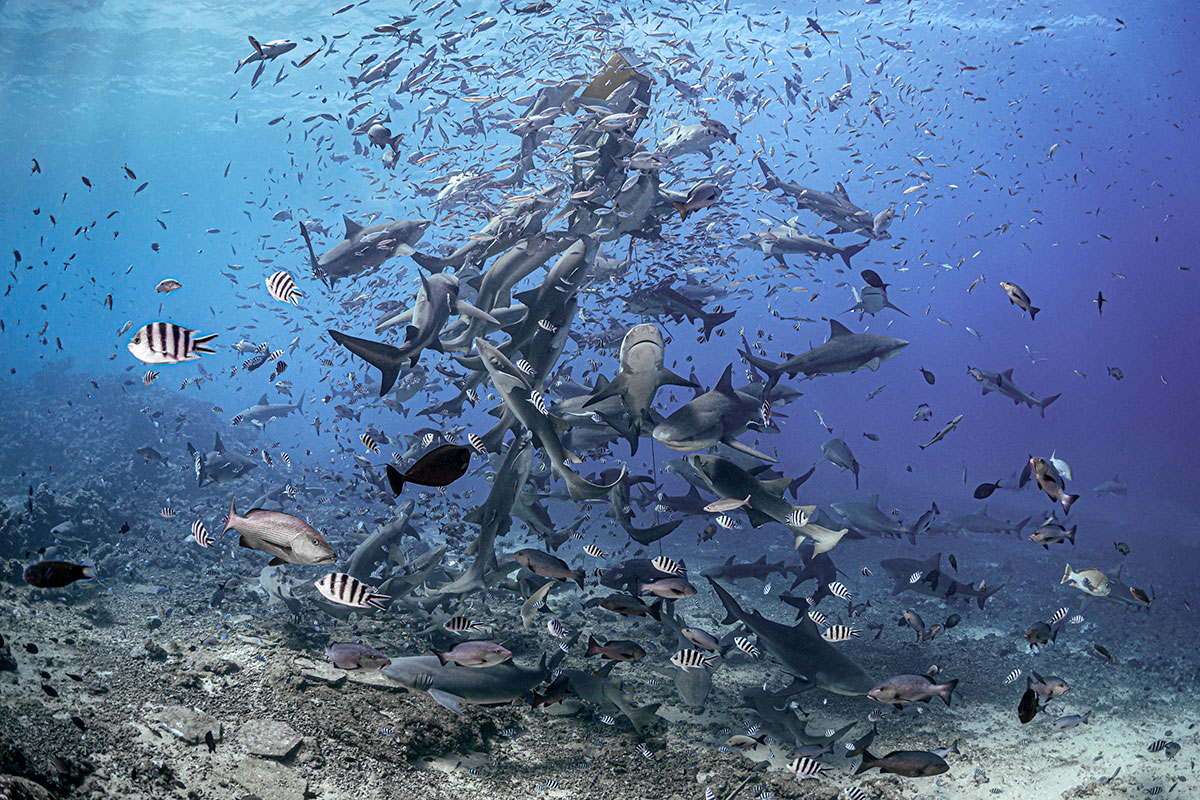
For another adrenaline rush, drop in at the famed Beqa Lagoon dive site just off Fiji's main island of Viti Levu. Divers descend to a fixed spot at about 100 feet (31 meters) and then take their places in the Arena as trained dive guides conduct a hand-feeding session for the waiting sharks.
Next, staff on the boat will begin dropping tuna heads into the water from a suspended bait bin, often creating an unforgettable feeding frenzy. The stars of the show are undoubtedly the beefy bull sharks, but divers can expect to see some combination of tigers, sicklefin lemon sharks, tawny nurse sharks, silvertips, grey reef sharks, plus whitetip and blacktip sharks too.
Best time to go: Year-round
6. Florida
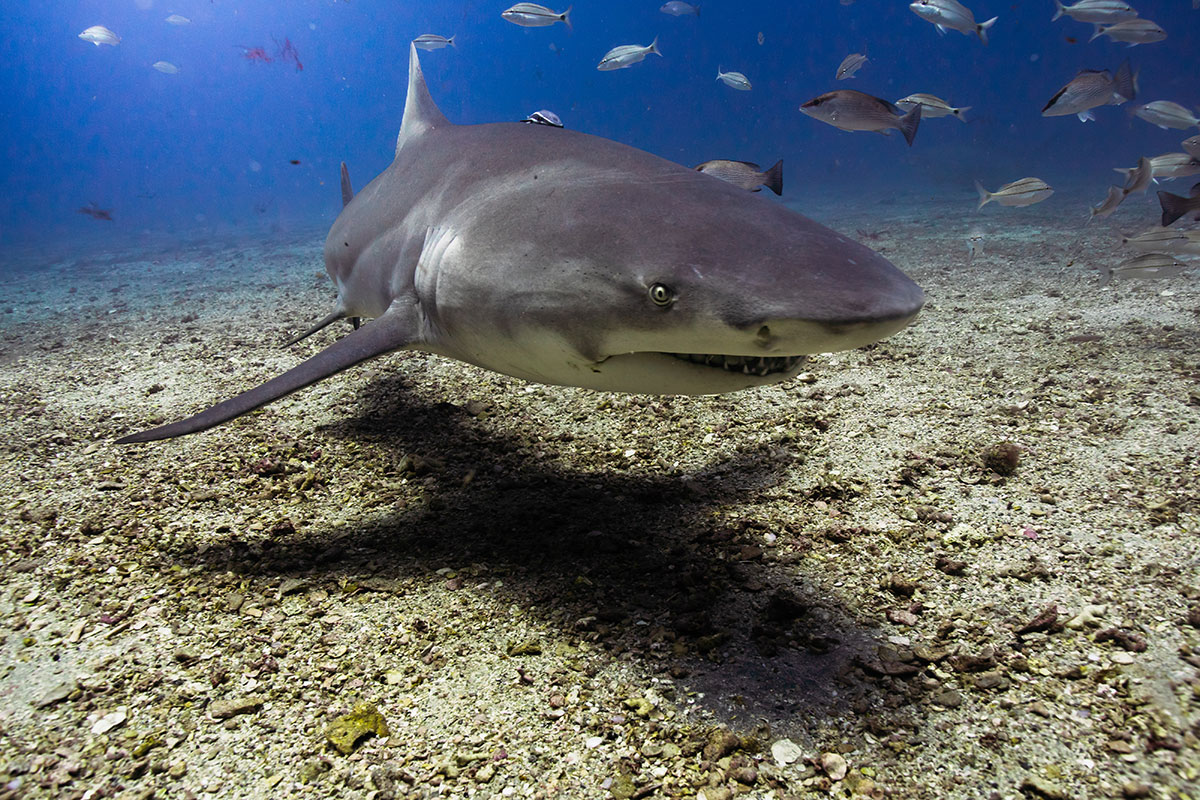
Off Florida's east coast, the deep waters of the Gulf Stream act as an aquatic highway, bringing lots of sharks within easy reach of diving day boats. Silky sharks, dusky sharks, tigers, and scalloped hammerheads are just a few of the species you may see, but there's one can't-miss event: the annual lemon shark migration.
Jupiter will be your launching pad to dive with the lemons, which typically travel en masse a few miles offshore each winter from January–March. Named because of their pale yellow-brown skin, lemon sharks can grow up to 10.5 feet (3.2 meters) long, but they're generally docile and non-aggressive. Dozens may join you on your dives, making for an unforgettable experience.
Best time to go: January–March
7. French Polynesia
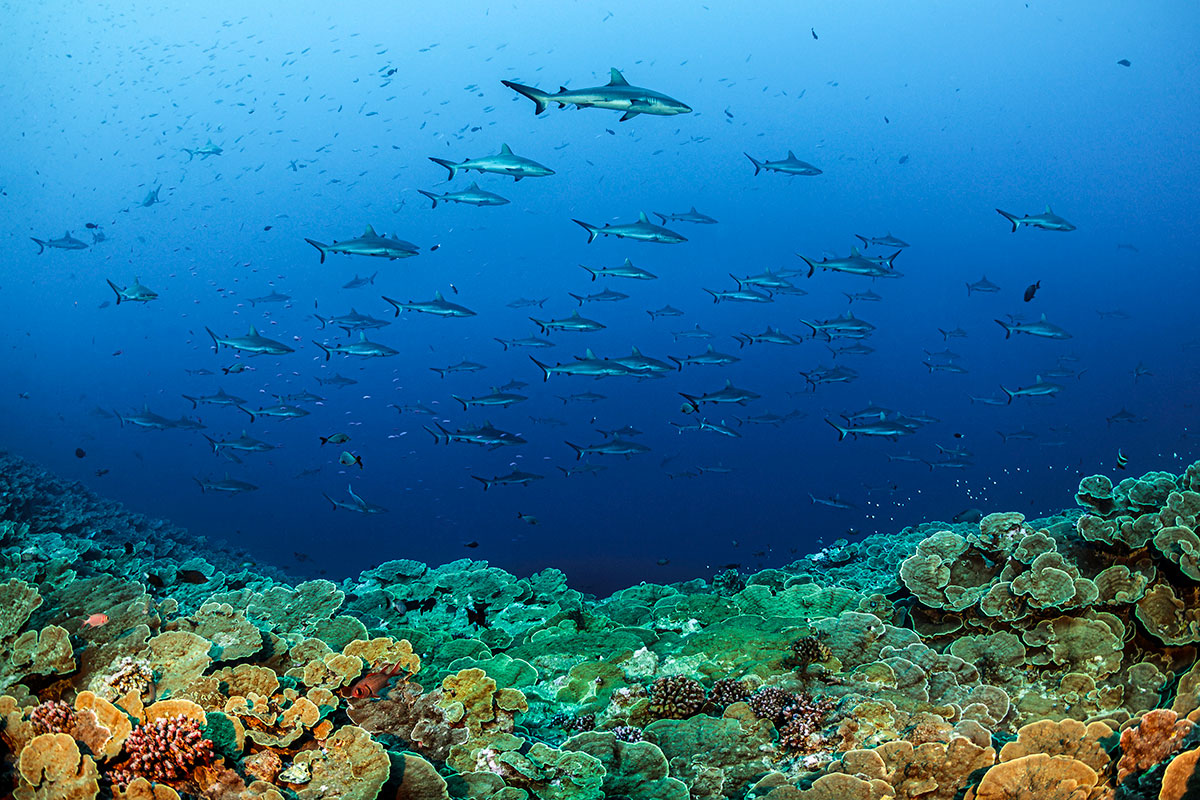
If the phrase "wall of sharks" sounds enticing, it's time to plan a trip to French Polynesia. Fakarava Atoll, located in the Tuamotu Archipelago, offers a world-renowned drift dive through waters absolutely teeming with grey reef sharks.
Encounters take place at the Tumakohua (South) Pass, where sharks take advantage of the steady tidal currents, funneled through the pass into and out of Fakarava Lagoon, to rest during the day and hunt at night.
The dive typically begins at the mouth of the pass on an incoming current and, after hanging onto the rocks briefly to watch the show, you'll drift into the lagoon with the current, right through that wall. Although it's always a spectacular dive, the prime time to visit is during the marbled grouper spawning, which takes place around the full moon in June or July.
Best time to go: Year-round
8. Indonesia
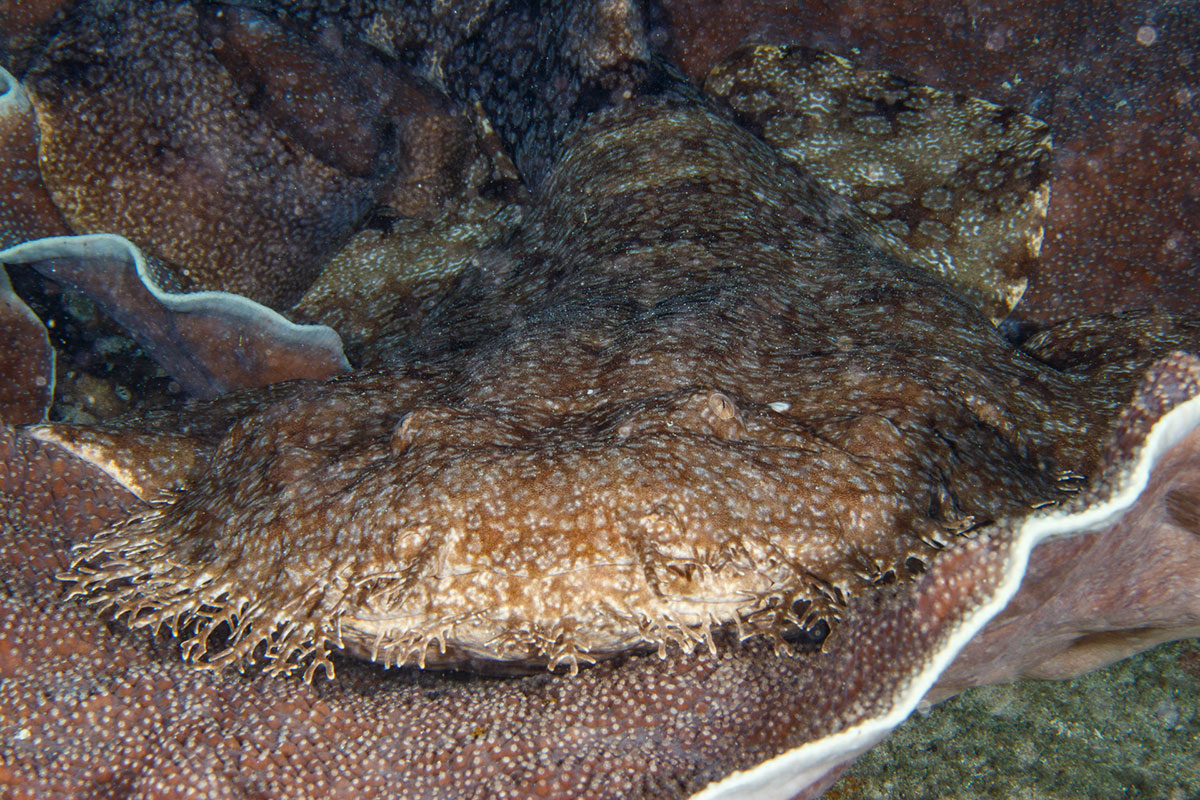
Almost as much fun to say as see, the wobbegong shark is another weird one for your bucket list. These small, harmless carpet sharks frequent the waters of Raja Ampat and grow to only around 4 feet (1.2 meters) long. With their mottled brown skin and whiskery barbels, they blend in well with the surrounding reef and substrate, using their natural camouflage to hunt.
Because they resemble moss-covered rocks and spend most of their time resting on the bottom, it can be easy to miss them, so it pays to have an experienced local guide. They're nocturnal, so look for them at dusk or dawn, when they're either gearing up for or turning in from a night on the hunt.
Best time to go: Year-round
9. Maldives
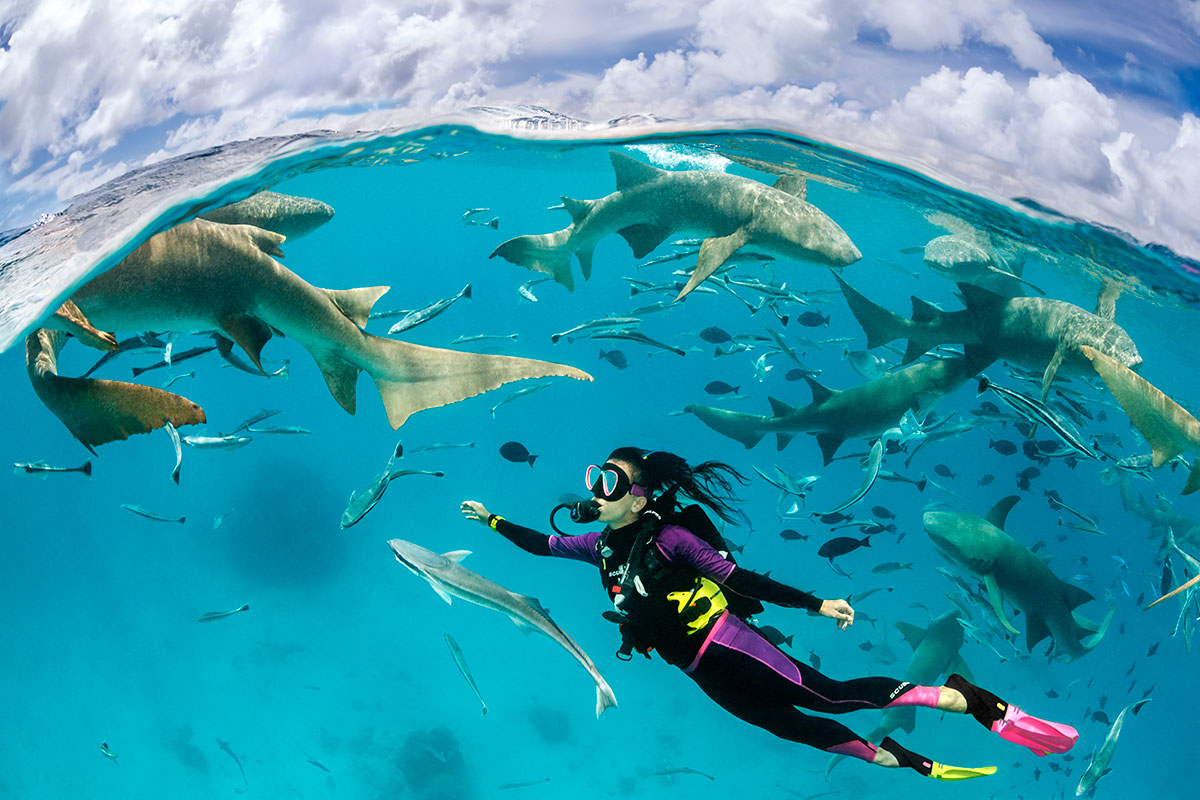
The Maldives is a true shark-lover's paradise. Take your pick: will it be whale sharks and reef sharks at South Ari Atoll, or tigers, hammerheads, silvertips, and thresher sharks at Fuvahmulah Atoll?
Located in the deep south, Fuvahmulah has become the place to see tiger sharks. It's an isolated island in the middle of open ocean and a cleaning station, so Fuvahmulah attracts not only nearly guaranteed tigers, but so much more, including the aforementioned thresher sharks, seasonal whale sharks, and huge schools of hammerheads.
South Ari Atoll has long been on divers' radar as a reliable spot to see whale sharks year-round, though the prime season is December–May when the waters are calm, and visibility can top 100 feet (31 meters). Whitetip, blacktip, and grey reef sharks are common on many dives as well.
Best time to go: Year-round, but mind the Southwest Monsoon from May–November
10. Philippines
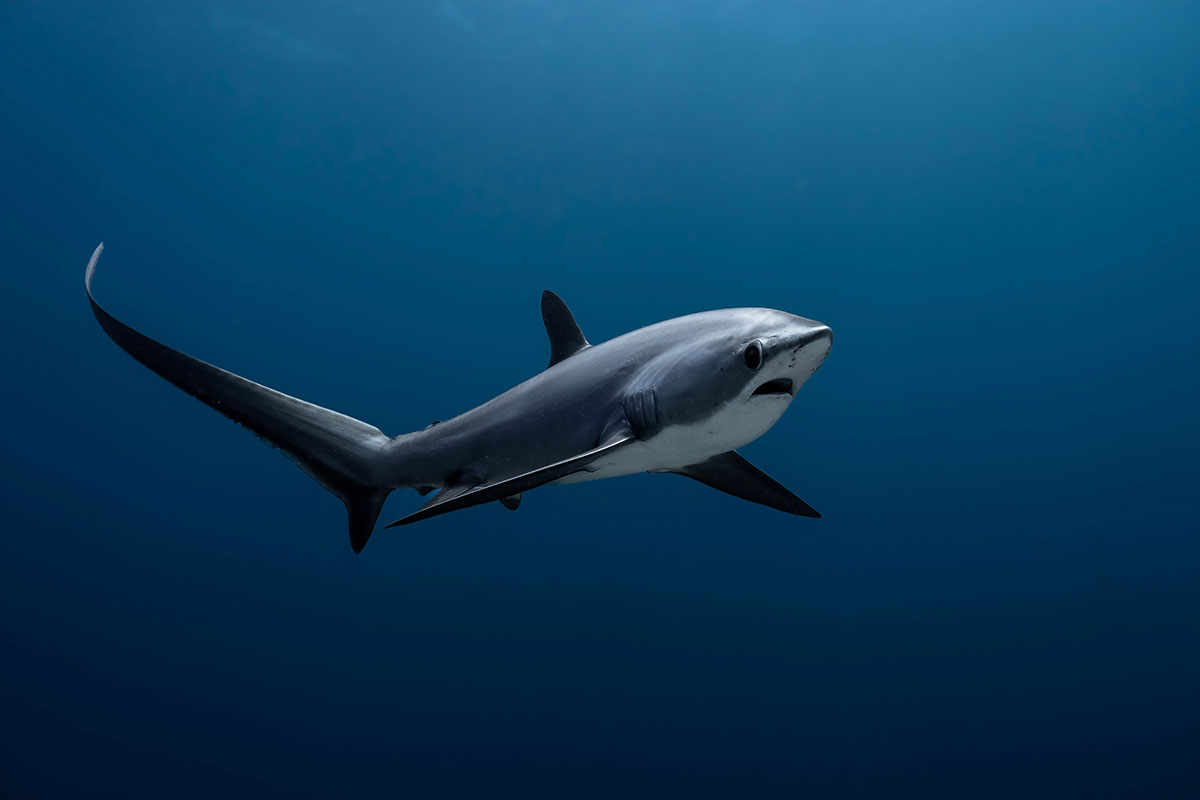
Though you can get lucky and see them elsewhere, including Fuvahmulah in the Maldives, there's only one location in the world where sightings of thresher sharks are nearly guaranteed: off the tiny island of Malapascua in the Philippines.
For reasons unknown, in 2022 the entire population moved from the famed Monad Shoal to cleaning stations at Kimud Shoal, about an hour's boat ride from Malapascua. Luckily for divers, the new backdrop offers an even better thresher shark dive. Kimud Shoal is shallower, at about 40–65 feet (12–18 meters), and the sharks arrive later in the morning, meaning a pre-dawn boat ride out to the dive site is no longer a given.
Best time to go: Year-round
11. South Africa
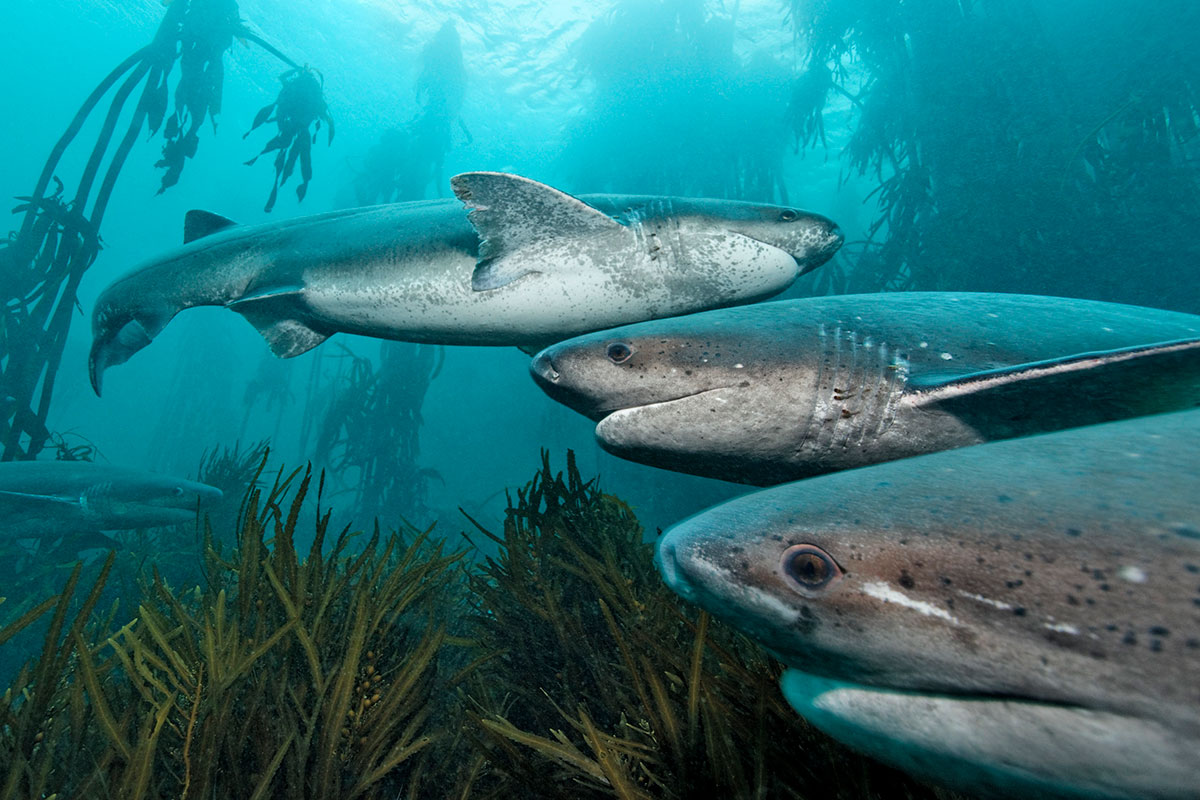
Although South Africa used to be known as a great white hotspot, recent years have seen a stark reduction of these famed sharks, due to several factors, including predation by a pair of local orcas known as Port and Starboard. Divers can, however, see a wide variety of other sharks along this 1,700-mile (2,736-kilometer) coastline, and it's well worth the trip even without the great whites.
Starting with the Western Cape, the dive site of Millers Point in Simonstown offers the chance to see multiple species at once: prehistoric-looking broadnose sevengill sharks patrol the kelp forests while small pyjama and shysharks hide among the waving stalks. Several companies offer cage dives to see feisty bronze whalers, also known as copper sharks, wherein air is surface-supplied, so divers can bring their non-diving friends along for the experience.
In the Eastern Cape, warmer water draws in several marquee species, including ragged-tooth sharks, known as sand tigers in the U.S., at Aliwal Shoal; tigers and hammerheads at Protea Banks; and blues and makos on pelagic dives about 90 minutes offshore.
Best time to go: Year-round
12. South Australia
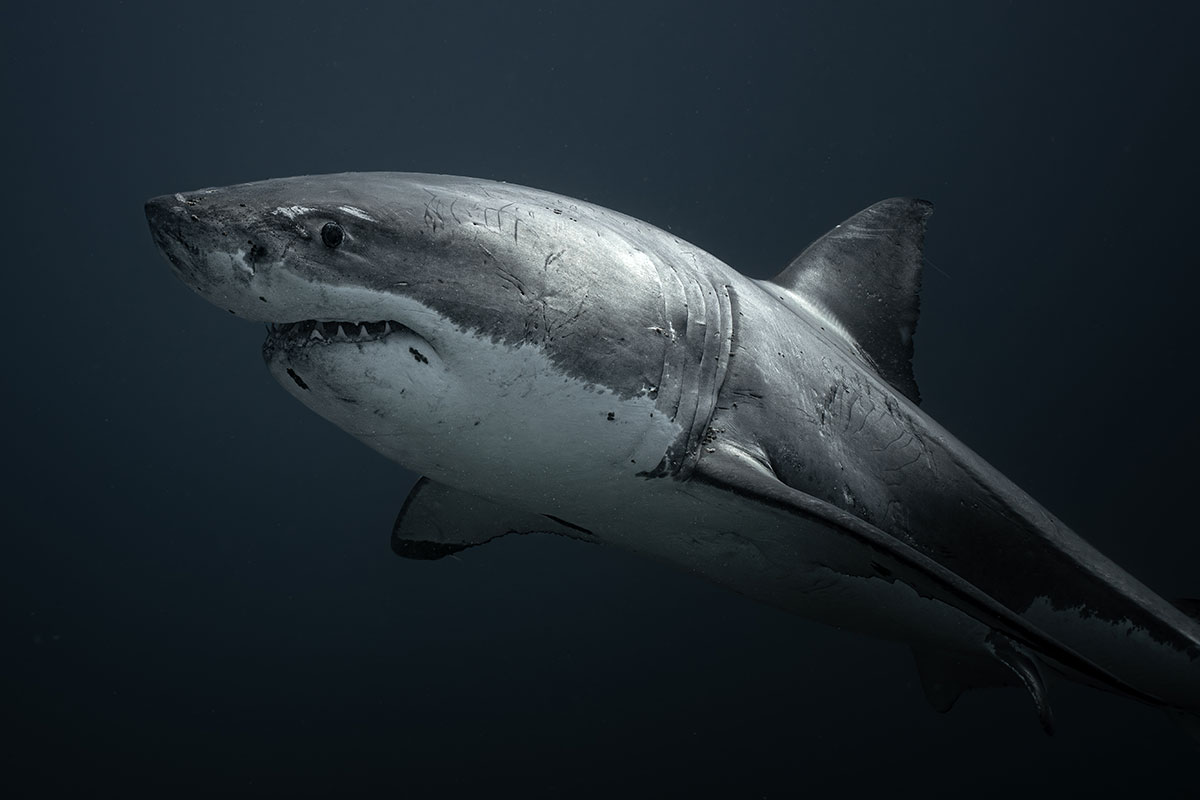
Although it's possible to cage dive with great whites in a few other locations, including Nova Scotia and the Farallon Islands off the coast of California, the warmer, clearer waters of South Australia's Neptune Islands are the most well-established. Located about 40 miles (65 kilometers) south of Port Lincoln, these islands are home to Australia's largest fur seal colony, a frequent snack for local great whites. Sharks here can grow to be massive, with some females topping out over 19 feet (6 meters) long.
The surface cage does not require scuba certification since air is surface-supplied via a hose. Certified divers can spend time in the ocean-floor cage, which rests around 65 feet.
Best time to go: Year-round, with peaks in December–February, April–August for large females, and September–October
Shark Diving FAQs
What is the best shark diving destination for beginners?
Beginner-friendly shark diving generally means shallow, calm water and a professional guide handling logistics, with no advanced certification or current-diving experience required. Bimini in the Bahamas is a good option because the dive is shallow, at 20 feet (6 meters), and visibility is typically excellent. California's La Jolla Shores offers the opportunity to snorkel or dive withsites located near migratory routes, nutrient-rich currents, or varied habitats overlapping in a small area will typically concentrate multiple shark species. The Galapagos, Cocos Island, and Malpelo Island are a textbook example, with frequent sightings of scalloped hammerheads, Galapagos sharks, whitetips, silky sharks, tiger sharks, and seasonal whale sharks. The Maldives' Fuvahmulah Atoll offers similar range, with tigers, hammerheads, silvertips, threshers, and whale sharks all in one place.
Do you need to be a certified or experienced diver to go shark diving?
Requirements vary widely depending on dive type and location. Most shark dives call for at least an Open Water certification; sites with challenging conditions like the Galapagos or Egypt's Elphinstone Reef are better suited to more experienced divers. Some experiences need no certification at all, including South Australia's great white dives, which include the option for a surface cage and surface-supplied air, open to non-divers.
What is the best time of year to go shark diving?
The best time to go shark diving depends on the destination and species, since sharks follow seasonal migration, breeding, and feeding patterns. Florida's lemon shark migration peaks January–March, while California's leopard sharks gather June–December to breed. Many locations, like Fiji and the Bahamas' Tiger Beach, are productive year-round.
Is shark diving safe?
Shark diving can be safe when it is done with a reputable operator, proper briefing, appropriate certification, and respect for local rules and wildlife. Conditions vary widely by destination, so divers should match the site to their experience level and avoid dives involving depth, current, or open-ocean conditions unless they are properly trained and comfortable.